

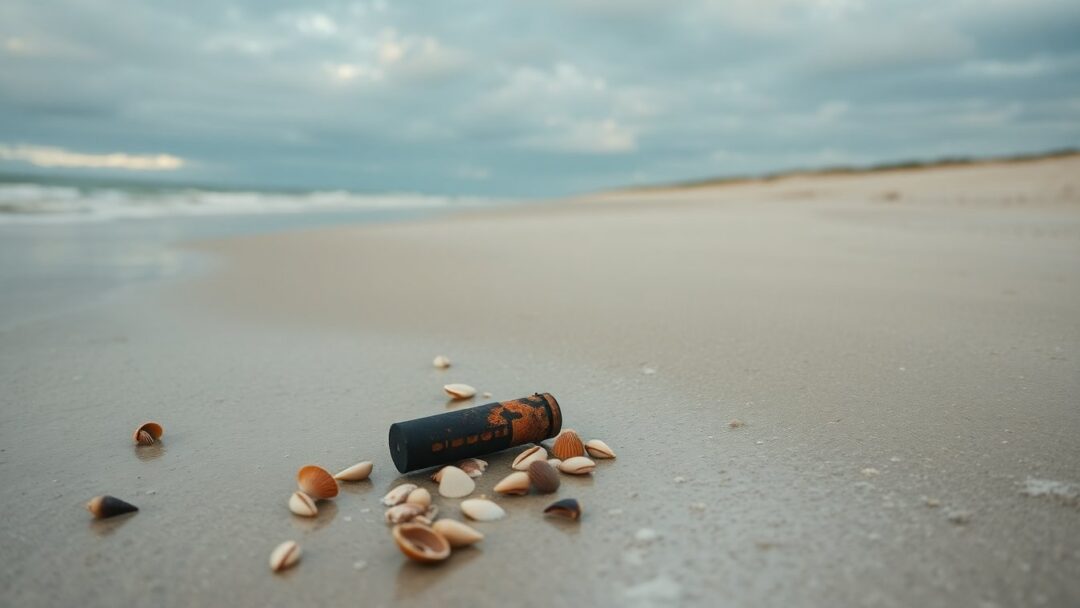
A Blue Origin rocket explosion at Cape Canaveral Space Force Station has triggered a fresh warning for people along Florida’s coast. After the incident during a hotfire test, authorities said pieces of debris may drift ashore in the coming days or weeks, prompting a clear message to beachgoers: do not touch anything that looks unusual.
The company has also opened a dedicated wreckage hotline and email address for anyone who believes they have found parts of the vehicle. While the explosion created a dramatic scene, officials emphasized that there is no danger to the broader community. For now, the focus is on monitoring the debris field, keeping the public safe, and collecting information about what happened.
What happened at Cape Canaveral
According to the sheriff’s office, the Blue Origin rocket appeared to explode on the launch pad on Thursday night. Livestream footage from Spaceflight Now showed the New Glenn vehicle at the pad before a massive fireball erupted around 9 p.m. Video captured from the Cape Canaveral Community Center also appeared to show the blast from a distance, underscoring how large the event looked even from outside the immediate area.
Blue Origin later confirmed on X that an anomaly occurred during the day’s test, but said all personnel were accounted for. Jeff Bezos echoed that message in a separate post, saying everyone was safe and that the company was already working to identify the cause. Brevard County Emergency Management also issued a notice shortly after 9:30 p.m., saying the incident posed no threat to the general public.
Officials stress safety first
Local authorities moved quickly to calm concerns. Brevard County Sheriff Wayne Ivey said the rocket exploded during a static fire test ahead of a planned launch and noted that there were no reported injuries. He added that the fire was expected to burn itself out and that county agencies were standing by in case assistance was needed. In separate remarks, emergency management officials repeated that the situation was being monitored closely and that residents did not need to panic.
The key message from officials was simple: if debris is found, do not pick it up, move it, or try to recover it. Instead, people should report it using the channels provided by Blue Origin. The company’s Wreckage Management Hotline is 321-222-4355, and reports can also be sent to [email protected]. That guidance matters because rocket hardware can contain hazardous materials, sharp fragments, or other risks that are not obvious from the outside.
Why the New Glenn matters
The rocket involved was New Glenn, the heavy-lift vehicle Blue Origin has been developing for major commercial and government missions. It was the third flight of the rocket and one the company intends to use for future lunar lander launches on behalf of NASA. The vehicle made its debut in 2026 from Cape Canaveral and is named after John Glenn, the first American to orbit Earth. That context helps explain why the explosion drew immediate attention well beyond Florida.
New Glenn had already faced a setback in April, when it left a satellite in the wrong orbit after an engine failure. Thursday’s explosion therefore adds another difficult moment for the program, which is trying to establish itself in the competitive world of heavy launch systems. Even so, the response from the company and federal officials made clear that test failures, while serious, are part of the process of developing complex spacecraft.
Federal agencies are reviewing the incident
NASA Administrator Jared Isaacman said the agency is aware of the anomaly involving Blue Origin’s New Glenn rocket at Launch Complex 36. In his comments, he noted that spaceflight is unforgiving and that developing new heavy-lift capability is extraordinarily difficult. The FAA later said it knew about the test anomaly and added that there was no impact to air traffic. The agency also stated that the test was not within the scope of FAA-licensed activities, and it referred questions to Blue Origin for additional details.
At this stage, the cause of the explosion has not been announced. That means many questions remain about the sequence of events, the condition of the vehicle before ignition, and what investigators will find as they examine the site. For coastal residents and visitors, however, the immediate advice is straightforward: if anything unusual washes up on the beach, treat it as potentially dangerous and leave it alone until authorities can respond.
As cleanup, analysis, and recovery efforts continue, Florida officials are asking the public to stay alert without interfering. The situation is unusual, but the safety guidance is familiar: keep a safe distance, report suspicious debris, and let trained teams handle the rest.


