
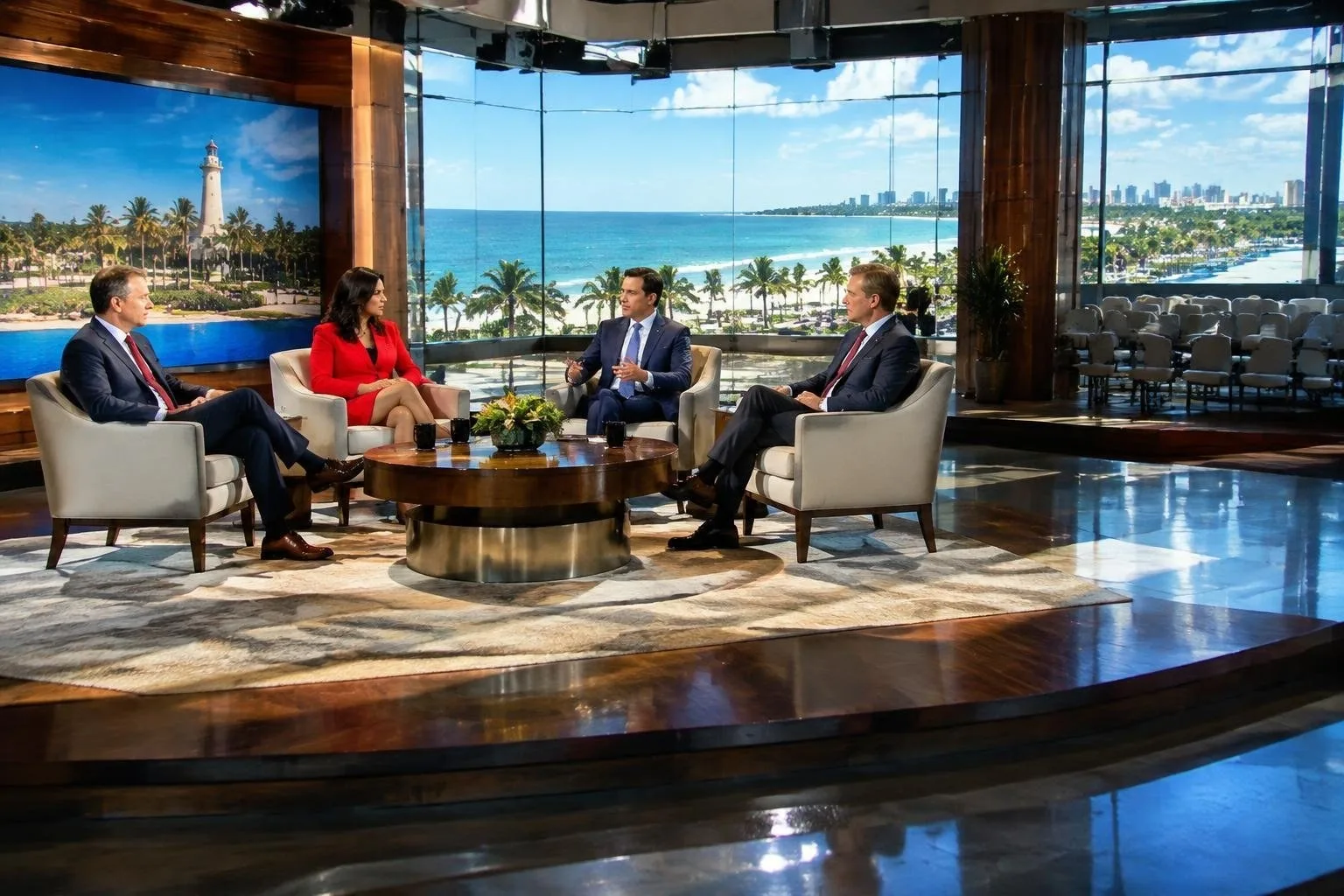
The conversation aired on The Florida Daily Show gathered host Ed Dean, co-host Lindsay Randall, New South Politics publisher Matt O’Hern and commentator Kaitlin Colgate to probe the Republican Party’s identity after the 2026 midterm elections. All four guests identify as conservatives, yet each recounted frequent clashes with ardent supporters of President Donald Trump on social platforms, setting the stage for a deeper examination of the party’s ideological fault lines.
Ideological fault lines inside the GOP
Colgate described a pattern where any criticism of the president sparked immediate accusations of disloyalty, while Randall noted that even a modest question about an administration policy could earn the label of “liberal.” Both highlighted the war in Iran as a flashpoint that split conservatives, and Randall added that younger voters often pivoted the discussion toward artificial intelligence and job-security anxieties. O’Hern warned that the loyalty test imposed by some MAGA adherents now marginalizes long-standing fiscal conservatives, turning them into outsiders when they challenge the administration’s agenda. Dean, a three-time Trump voter, echoed the sentiment, stating that he still disagrees with several of the president’s economic and foreign-policy choices.
The panel’s economic debate centered on the Trump administration’s use of tariffs and market-interventionist measures. Dean argued that tariffs function as hidden taxes that raise costs for American businesses and consumers, contradicting the free-market conservatism that has defined the party for decades. He also cited recent Republican legislation that extended the former president’s tax cuts while preserving subsidies for renewable-energy projects, questioning why the GOP has not pursued further reductions in capital-gains, individual-income, or corporate taxes. References to Rep. Tim Burchett’s remarks about affordability underscored the perception that leaders are out of step with Voter concerns.
Election outcomes reshape the party’s calculus
Beyond the ideological debate, the 2026 midterms produced a wave of historic victories that signaled a broader repudiation of Trump-aligned policies. Voters elected the first Black woman governor in Wisconsin (David Crowley), the first Native American woman governor in New Mexico (Deb Haaland), and the first Hispanic governor of Texas (Gina Hinojosa). Georgia’s Keisha Lance Bottoms and California’s Xavier Becerra became the first Black and Latino governors of their states, respectively. Senate races added Peggy Flanagan as the first Native American woman senator, Abdul El-Sayed as Michigan’s first Muslim senator, and Chris Pappas as New Hampshire’s first openly gay male senator. These outcomes, alongside Republican setbacks in traditionally red states, suggest that voters are weighing issues of representation and inclusive governance alongside economic concerns.
In Florida, the gubernatorial race illustrated the limits of Trump’s endorsement power. While former President Trump heavily backed several primary contenders, the eventual governor-elect, Byron Donalds, shifted his messaging toward a personal brand and an alliance with Governor Ron DeSantis as the general election approached. Dean interpreted this pivot as evidence that Republican hopefuls may need to broaden their appeal beyond the MAGA base to win competitive contests.
Who could inherit the MAGA mantle?
The discussion turned to succession within the movement. Dean cited Clay Travis’s claim that the Trump era effectively ended after the midterms, while Colgate questioned whether the former president could retain substantial influence beyond his vetoes and executive orders. Speculation centered on Vice President JD Vance, whom the panel described as more closely aligned with the current MAGA identity, but consensus was lacking. Both DeSantis and Secretary of State Marco Rubio were dismissed as unlikely to simply step into the role, and the panel noted that the movement itself may evolve regardless of individual leaders.
Ultimately, the panel stressed that the Republican Party faces a choice: anchor itself in a set of principles (limited government, free markets, fiscal restraint) or continue to define itself by loyalty to a single figure. As the GOP evaluates the fallout from the 2026 elections, the internal debate highlighted by the Florida Daily Show may shape the party’s policy agenda and leadership for years to come.